



15 years after Fukushima nuclear disaster, recovery continues in a changed landscape
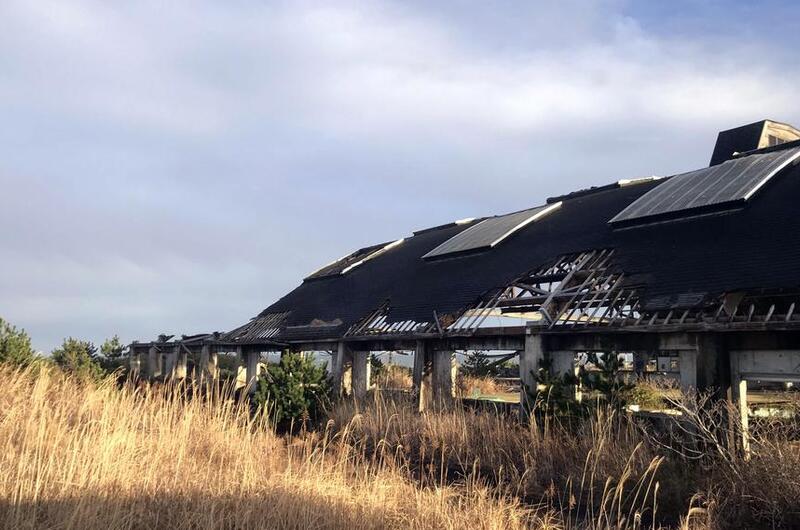
The ruins of a tsunami-damaged building sit near Japan's Fukushima Daiichi Nuclear Power Plant, March 4, 2026.
By Seth Robson | Stars and Stripes March 10, 2026
FUKUSHIMA, Japan — Nature is reclaiming abandoned buildings in the exclusion zone surrounding Fukushima Daiichi Nuclear Power Plant, an area that appears frozen in time 15 years after disaster struck.
Japan on Wednesday will mark the anniversary of the magnitude-9 earthquake and tsunami that devastated the country’s northeastern coast on March 11, 2011, killing nearly 20,000 people and triggering one of the world’s worst nuclear accidents.
The towering tsunami — reaching 133 feet in some places — slammed into the nuclear plant, knocking out power systems and triggering reactor meltdowns and explosions that forced tens of thousands of residents to flee.
The accident released radioactive material that contaminated land, air and water across a wide area, with traces detected as far away as Tokyo, roughly 130 miles to the south.
The crisis also prompted the evacuation of thousands of U.S. military family members from Japan during a relief effort dubbed Operation Tomodachi — the Japanese word for “friend” — involving about 20,000 American service members.
Today, areas surrounding the plant remain off limits. Part of the landscape is dominated by a facility holding vast amounts of radioactive soil, while electronic signs along roadways display radiation levels.
A sign near The Great East Japan Earthquake and Nuclear Disaster Memorial Museum in Futaba, just north of the restricted zone, showed radiation levels of 0.045 microsieverts per hour on March 4. That level is relatively low, but the displays serve as a reminder of the disaster’s lingering effects.
In some cleared areas, fields stripped of radioactive soil remain barren. Large solar panel installations now stretch across the countryside.
Inside the exclusion zone, however, nature is steadily reclaiming what people left behind. Buildings sit largely untouched since the mass evacuation, with yards overgrown and interiors still holding furniture, personal belongings and other traces of daily life.
Outside the restricted area, coastal towns that were once thriving rural communities are home to far fewer residents than before the disaster. Many evacuees have chosen not to return.
Those who have come back include Isuke Takakura, a landscaper who once lived in Futaba. On the day of the earthquake, he used a small truck to evacuate neighbors before the tsunami struck, he told reporters at the memorial museum on March 4.
“If the tsunami had hit a few seconds earlier, I probably wouldn’t have made it,” he said.
The waves destroyed about 50 homes in Takakura’s neighborhood and killed 16 people, he said.
After the tsunami, he said residents began discussing the risks of the nuclear plant. Police wearing protective gear soon warned them to move farther away from the damaged facility.
Takakura eventually found work in Tokyo but later returned to Fukushima prefecture, saying he felt a responsibility to help his hometown, where he has rebuilt a local shrine.
Efforts to revive the area include new research institutions and experimental industries aimed at reshaping Fukushima’s economy.
Among them is the Fukushima Institute for Research, Education and Innovation, or F-REI, a national research center established in 2023 in the town of Namie near the exclusion zone.
The institute plans to employ researchers studying fields such as robotics for disaster response, renewable energy, radiation science and agriculture, directors told reporters at the institute on March 5.
Other projects include an experimental fish farm, a vineyard, a towel factory and a plant that combines inedible rice with plastic to produce consumer goods, including toys.
Japan’s prime minister, Sanae Takaichi, visited the nuclear power plant in December to observe decommissioning work. She wrote Friday on X that she planned to return to Fukushima for a memorial service on the disaster’s anniversary.
U.S. Forces Japan has produced a documentary — “Allies Across the Ocean” — to mark the anniversary, Air Force Col. John Severns, spokesman for the command, said by email Tuesday.
A trailer of the production, which includes footage of Operation Tomodachi and interviews with American and Japanese troops, will be released Wednesday on social media with the full version available to view the next day, he said.
Stars and Stripes reporter Hana Kusumoto contributed to this report.