



Veteran barber closes decades-old shop on US military base in downtown Tokyo
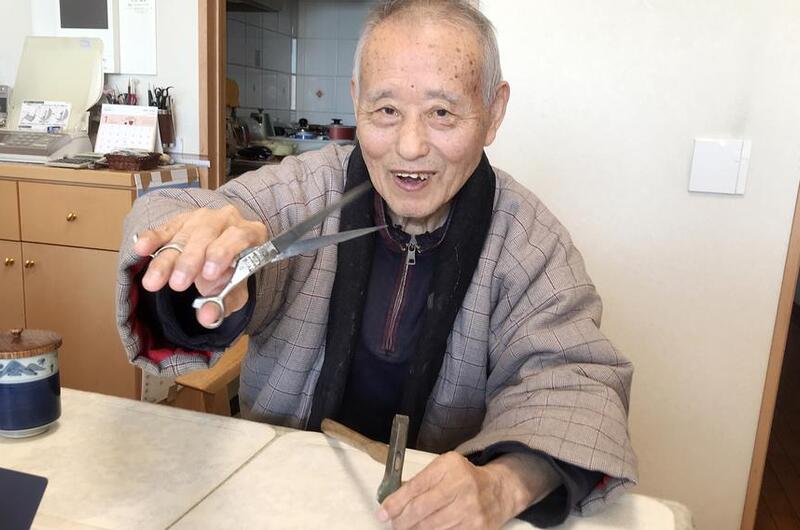
Retired Japanese barber Harumi Aketo shows off his scissors at his Tokyo home, Jan. 14, 2026. He recently retired after a more than 60-year career that included cutting hair at the U.S. Army's Akasaka Press Center.
By Seth Robson | Stars and Stripes February 2, 2026
AKASAKA PRESS CENTER, Tokyo — The old scissors remain straight and sharp in the hands of 84-year-old retired barber Harumi Aketo.
He cut hair for more than 60 years, including nearly two decades in a small, second-floor barbershop that was shuttered late last year at Stars and Stripes Pacific headquarters in central Tokyo.
Aketo became a hairdresser largely by chance, he said during a Jan. 14 interview at his apartment just a short walk from the press center, which is more commonly known as Hardy Barracks.
Denied admission to a technical high school in his hometown of Hachinohe in northeastern Japan, Aketo instead took an entrance exam for hairdressing school at age 16 and passed with ease. He still keeps the faded notice congratulating him.
After a year of study, he completed an internship and began working in 1958 at a salon in his hometown, where he stayed for five years. At that time, most Japanese customers — along with some American service members from nearby Misawa Air Base – preferred crew cuts, he recalled.
When a fellow graduate invited him to Tokyo, Aketo moved south. In 1968, he opened his own business, the Kato Barber Shop, in what was then Kasumi and is now known as Nishiazabu.
Styles changed over the decades. Longer hair and perms were popular in the 1970s, but Aketo said he most often cut hair short.
More than 20 years ago, someone connected to the U.S. military suggested Aketo work up to three days a week at the press center. He later began traveling to Yokohama North Dock, another U.S. Army facility in nearby Kanagawa prefecture, to cut hair.
His customers included U.S. service members, American civilians and Japanese base employees.
Cutting foreigners’ hair posed challenges, especially Black Americans’ hair, Aketo said.
“It’s curlier and thinner than Japanese people’s thick straight hair,” he said.
His shop had no television, only a radio and newspapers spread on the floor to catch hair clippings. Many American customers wanted short hair — but not too short before a night out, Aketo said. He sometimes recognized them around town.
The barbershop closed as the press center saw an influx of personnel tied to U.S. Forces Japan, which opened an office in the building last year to work more closely with Japan’s Ministry of Defense nearby.
The barbershop will be converted into a health and human resources office for Japanese employees, U.S. Army Garrison Japan spokesman Rob Helton said by email Friday.
Aketo met his wife, Takeko, while working at the same hairdressing shop, and the couple still cut each other’s hair. Their apartment holds mementos from his career, including cutthroat razors, mirrors and a hammer used to straighten scissors.
If scissors are not perfectly aligned, they will not cut properly, Aketo said — a skill he worries younger barbers are losing.
“The scissors are the most important thing,” he said, holding up a sharpened pair. “If the scissors can’t cut, they will pull the hair and hurt.”
Stars and Stripes reporter Hana Kusumoto contributed to this report.