



From the Archives
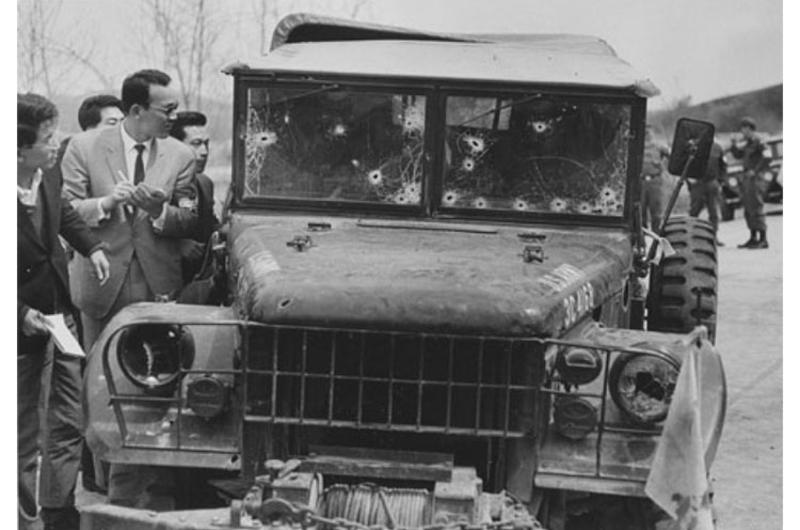
DMZ ambush survivors seen lucky to be alive
Observers at the scene of Sunday night's bold ambush by Communist North Koreans who machine-gunned and killed four United Nations Command soldiers reached one conclusion: "I don't see how anybody survived this."
Former community destroyed by 2011 tsunami now just a stop on way to somewhere else
A reconstruction worker on his lunch break walks by the framed pictures of U.S. soldiers that he’s passed by several times before — but this time, he really looks.
Fukushima radiation poses little risk, but lack of trust lingers
The worst health effects of the 2011 Fukushima Dai-chi nuclear power plant meltdown aren’t coming from radiation — at least, not yet.
Suburban sprawl, downtown struggles challenge Tohoku’s tsunami recovery
Any American from a city with a forgotten Main Street would recognize what is happening in Ishinomaki.
Spurred by help from military families, tsunami victims aid others in need
Take papers dyed in springtime colors, fold them into dozens of flower shapes and sew them into a single ball.
Candidates opposed to US military transfers lose in Okinawa, Iwakuni
Mayors committed to U.S. military base realignment plans in Okinawa and Iwakuni each won re-election this past weekend, giving the Japanese government a political boost against those opposed to the moves.

Pence in Japan: ‘All options are on the table’ regarding North Korea
Vice President Mike Pence said “all options are on the table” as North Korea continues to develop its nuclear-weapons and ballistic-missile programs, during a speech Wednesday aboard the aircraft carrier USS Ronald Reagan.